Catalog
 Sanding materials
 Tools
Tools
 Polishing materials
 Wood finishing materials
 Adhesive
 Painting equipment
 Wood repair materials
 Abrasive discs
 Filters for painting chambers
 Adhesive tapes
 Preparation materials for painting
 Personal safety products
 Industrial equipment

 Sign in


Preparation and finishing of molds for the manufacture of yachts and other vessels

Due to the harsh conditions of salt, water and wind, the surfaces of ships must be durable. It all starts with the hull, which requires a liner and mold to create the frame that gives the yacht or other watercraft its shape and strength.
One aspect of successful mold production is proper surface preparation of the insert. Any surface imperfections will be reflected in the mold and then in future parts produced from that mold, so it is extremely important to remove all defects and ensure a high quality finish. In addition, due to the smoother outer surface of the mold, less time will be spent on finishing.
With Mirka mesh and perforated sanding tools, ergonomic sanders and effective dust removal equipment, you will be able to work faster and more efficiently and improve work safety.
For a better finish. Sanding and polishing of the gel coating of the molds.
1/8 - Full process. Smoother shaped gel coating surface with Mirka solution.
For the successful construction of a yacht or other vessel, proper preparation of both the liner and the mold surface is essential. Any defects on the surface of the insert will be reflected in the mold and subsequently in the parts produced from it. The smoother outer surface of the mold means less time spent on finishing, saving you time and money.
You can watch the full video here or check out this listing for the practical details of the detailed process.
2/8 - Step 1. Sanding.
.jpg)
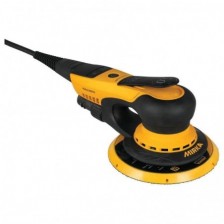
If there is a lot of orange peel effect, start sanding with 600 grit Mirka Galaxy in combination with Mirka DEROS 650CV.
3/8 - Step 2
.jpg)
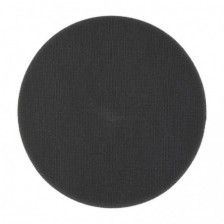
Next, sand with 800-grit Galaxy with mesh backing.
Clean the surface after each step.
Sand until the scratches are minimal.
4/8 - Step 3
.jpg)
Next, sand with a 1200 or 1500 grit Galaxy and mesh pad.
Clean the surface.
5/8 - Step 4
.jpg)
Next, sand with 2000 grit Galaxy and mesh pad.
Clean the surface.
6/8 - Step 5
.jpg)
Continue sanding with Mirka Abralon® 3000. When wet sanding, turn off the vacuum cleaner.
Clean the surface.
7/8 - Step 1. Polishing.
.jpg)
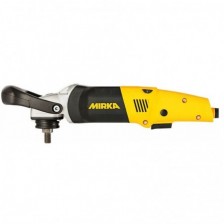
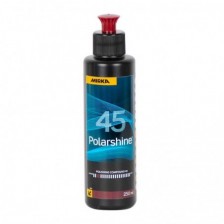
Polish the surface with Polarshine 45 and lambswool base Pro using Mirka PS 1437 polisher to remove sanding scratches.
Clean the surface after each step.
8/8 - Step 2
.jpg)
Bright colors
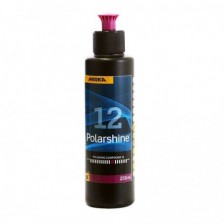
For bright surfaces, we recommend using Polarshine® 12 and an orange wafer-type foam base.
Dark colors
For dark surfaces, use Polarshine® 12 Black with a black wafer-type foam base to remove polish marks, haze and raised imperfections.
Clean the surface.
Set yourself up for success - why surfaces matter when creating shapes. Why do you need the entire surface of the mold to be smooth?
There are two types of shapes, convex and concave. Convex shapes are faster and cheaper to make. Each piece produced will have a rough texture on the outside and require more machining. Concave shapes are often more expensive, but require less machining because each part has a smoother outer surface.
Nautor's Swan, Finland, High quality finish.
For Finnish yacht builder Nautor, high-quality finishing is a tribute to the company's roots and heritage, and requires the best power tools and abrasives. Benny Brännbacka from Nautor shares what it's like to work with Mirka and how important customer satisfaction is to building impressive yachts with Mirka solutions.
"It's great to work with Mirka, we cooperate constantly."
Save health, time and money. Dust-free sanding.
Do you end up in a cloud of dust while sanding? Try Mirka's advanced sanding solutions and see how a dust-free working environment can contribute to your business success.
The benefits of dustless sanding
A healthier work environment - prevent dust from entering your lungs
You save time - there is no need to clean up after sanding, and clean abrasives sand better
Save money - anti-clogging, so you can use the same abrasive for longer
Quality finish - due to a finer scratch pattern
A better choice for you and the environment. Water-based polishes.
All Mirka polishes are water-based and manufactured in Finland. Water-based polishing compounds have many advantages.
- Effective long-term scratch removal - water-based compounds remove scratches permanently. Solvent-based compounds may lose their gloss after cleaning with a degreaser, and in some cases they only temporarily hide scratches.
- Safer for the user - no dangerous chemicals
- Sustainable – water-based polishes are more environmentally friendly because they do not contain benzene or similar hazardous chemicals.
"Solvent-based polishes may be effective in the short term, but they are more damaging and damaging." - Kim Rönnholm, Portfolio Manager, Mirka.